 Photo: REHBER0770 / Wikimedia Commons, CC BY-SA 4.0
Best time to visit
April–June and September–October
Ideal stay
3–4 days
Region
Mediterranean
From Istanbul
481 km
About Antalya
Antalya is Türkiye's busiest holiday gateway, but it is also a real working city of more than a million people, spread along cliffs above the Mediterranean with the Beydağları range of the Taurus Mountains rising straight out of the sea to the west. Most visitors arrive for the beaches and the resorts strung out along the coast, yet the city itself rewards a few days of attention.
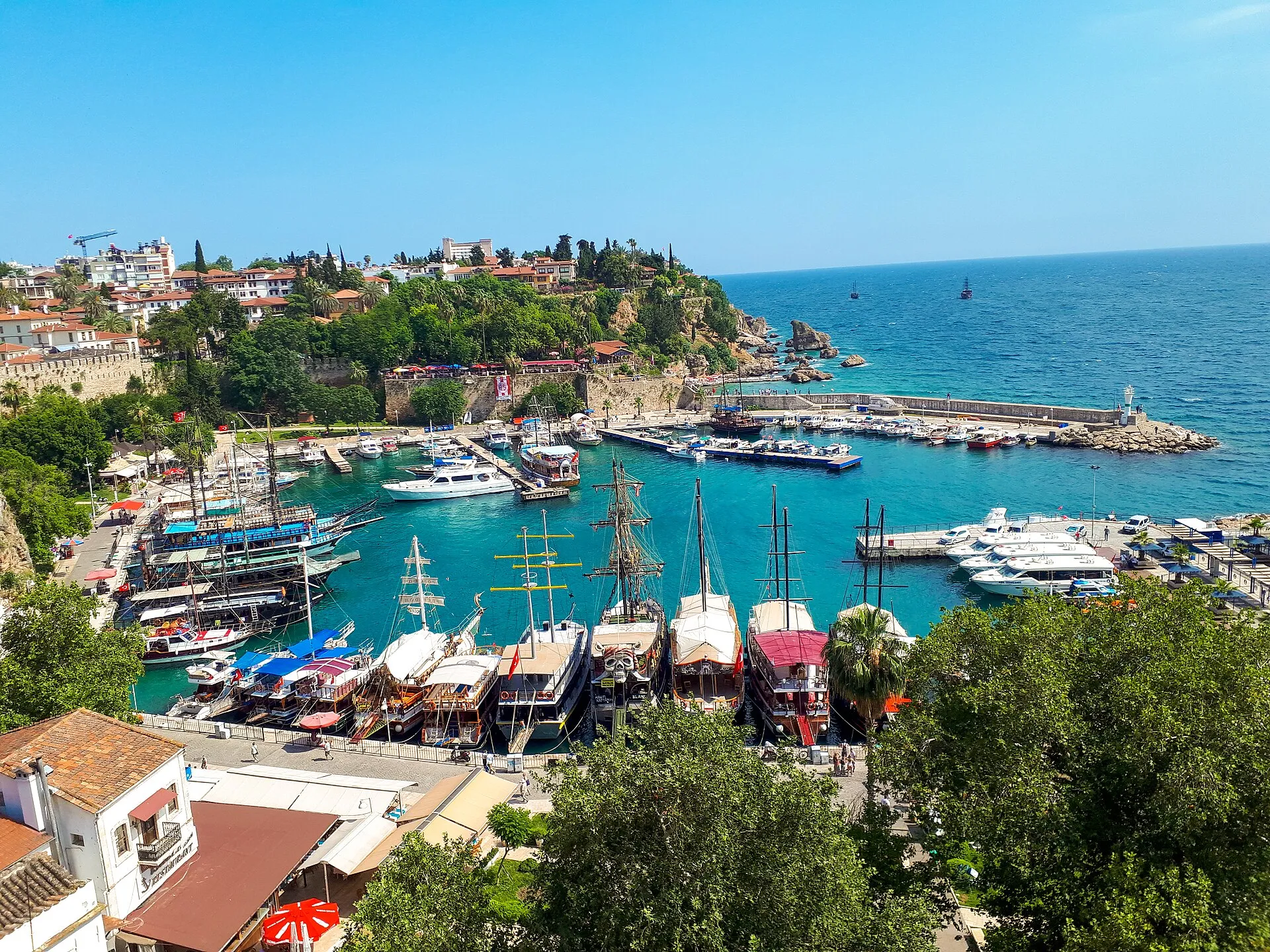
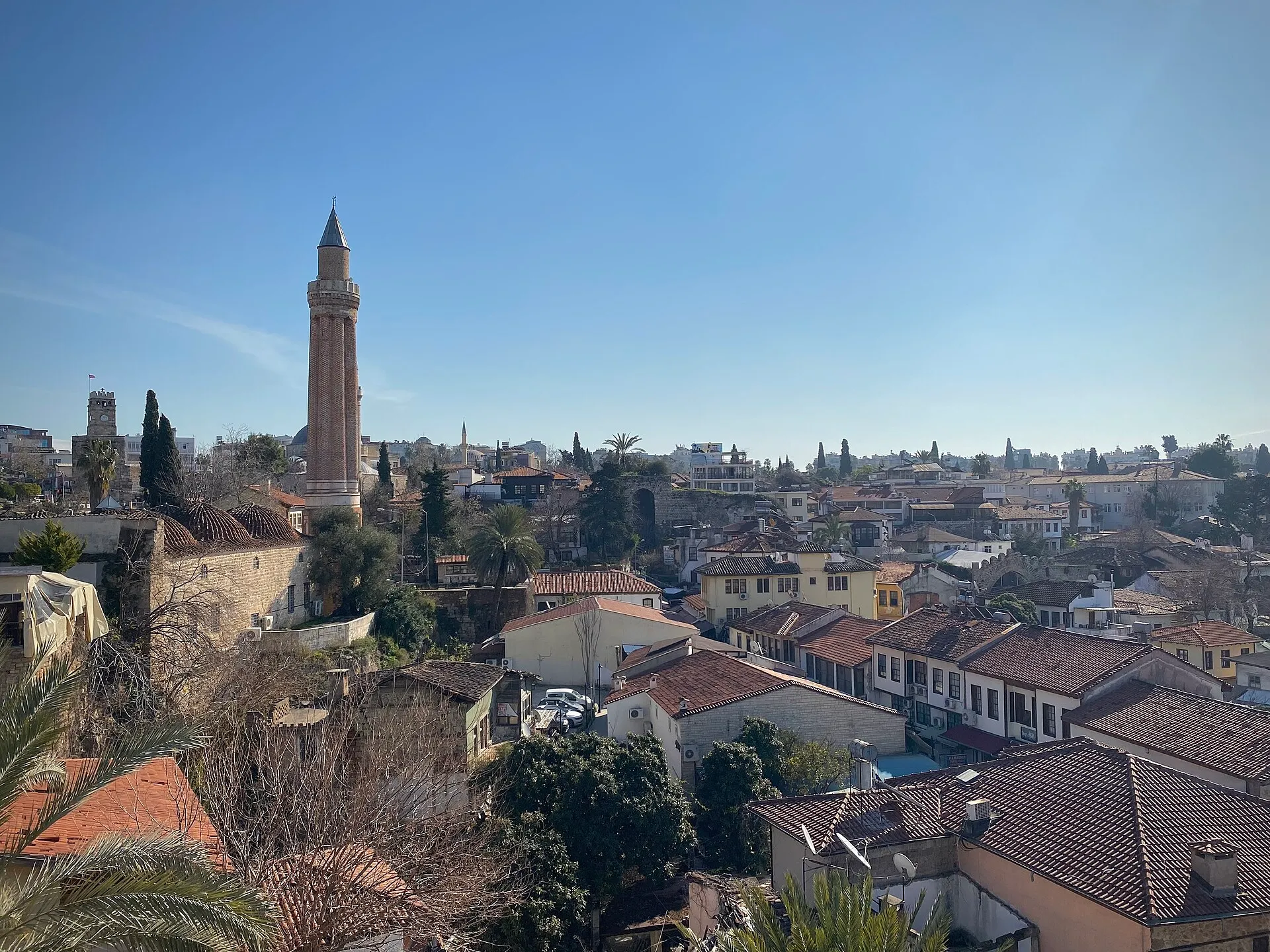
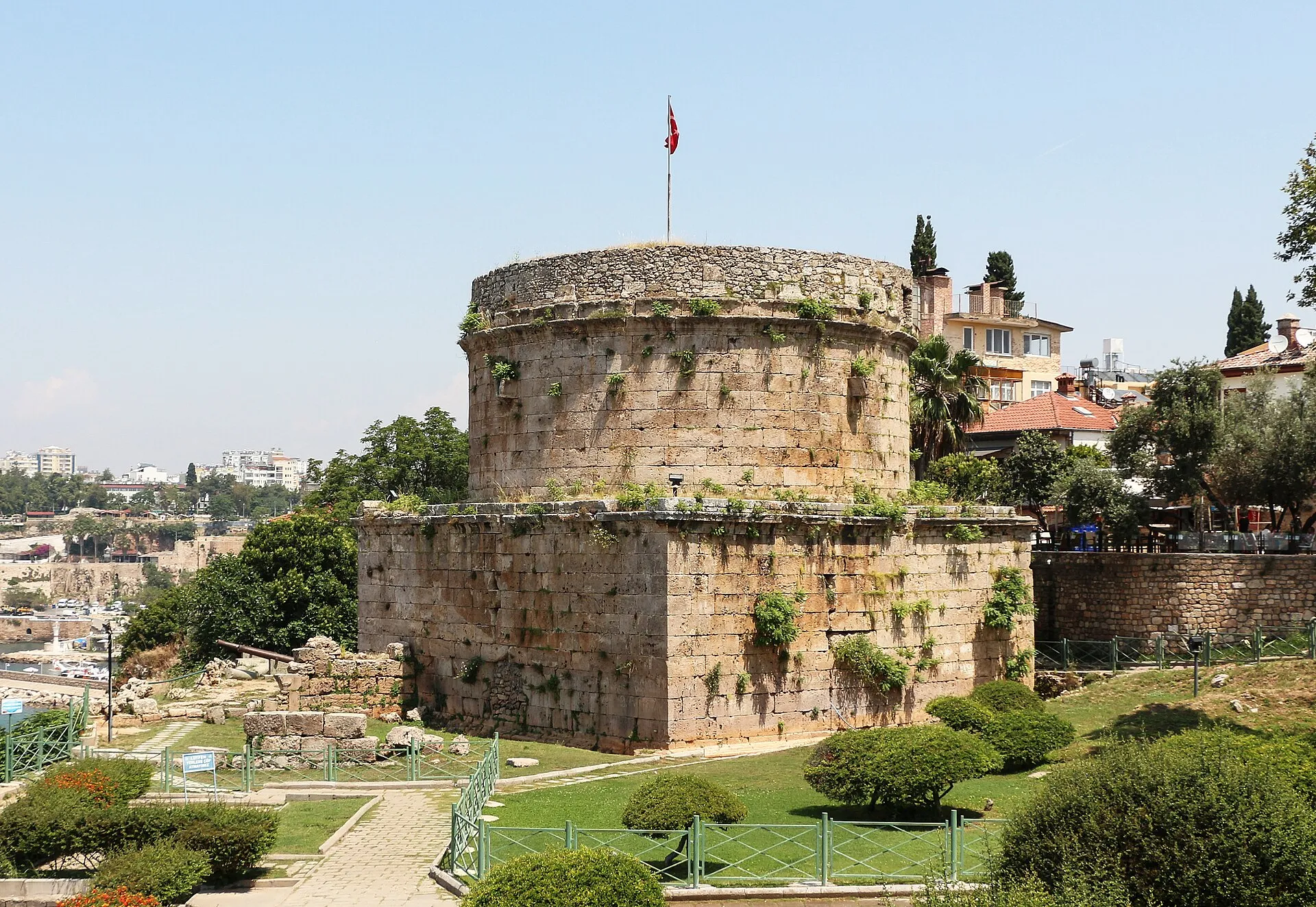
At its heart is Kaleiçi, the walled old town, where Ottoman houses with timber bay windows line lanes that drop down to the old Roman harbour. You enter through Hadrian's Gate, built for the emperor's visit in the 2nd century, and leave past the Seljuk fluted minaret and the stout Hıdırlık Tower on the cliff edge. Evenings here are for harbour views, long dinners and a drink as the sun drops behind the mountains.
Beyond the old town, the city has two very different beaches: pebbly Konyaaltı to the west, framed by mountains, and sandy Lara to the east, close to where the Düden River tumbles off the cliffs into the sea. Within an hour's drive are some of the finest ancient sites in Anatolia, including the near-complete Roman theatre at Aspendos, the colonnaded streets of Perge and the mountain-top ruins of Termessos.
Summers are long and hot, with sea swimming from May to late October. Spring and autumn are the best seasons for combining the ruins with the beaches, and winter is mild enough for sightseeing in shirtsleeves on many days.
12 hand-picked places
Museums & ruinsBelkıs, Serik, Antalya· ₺₺
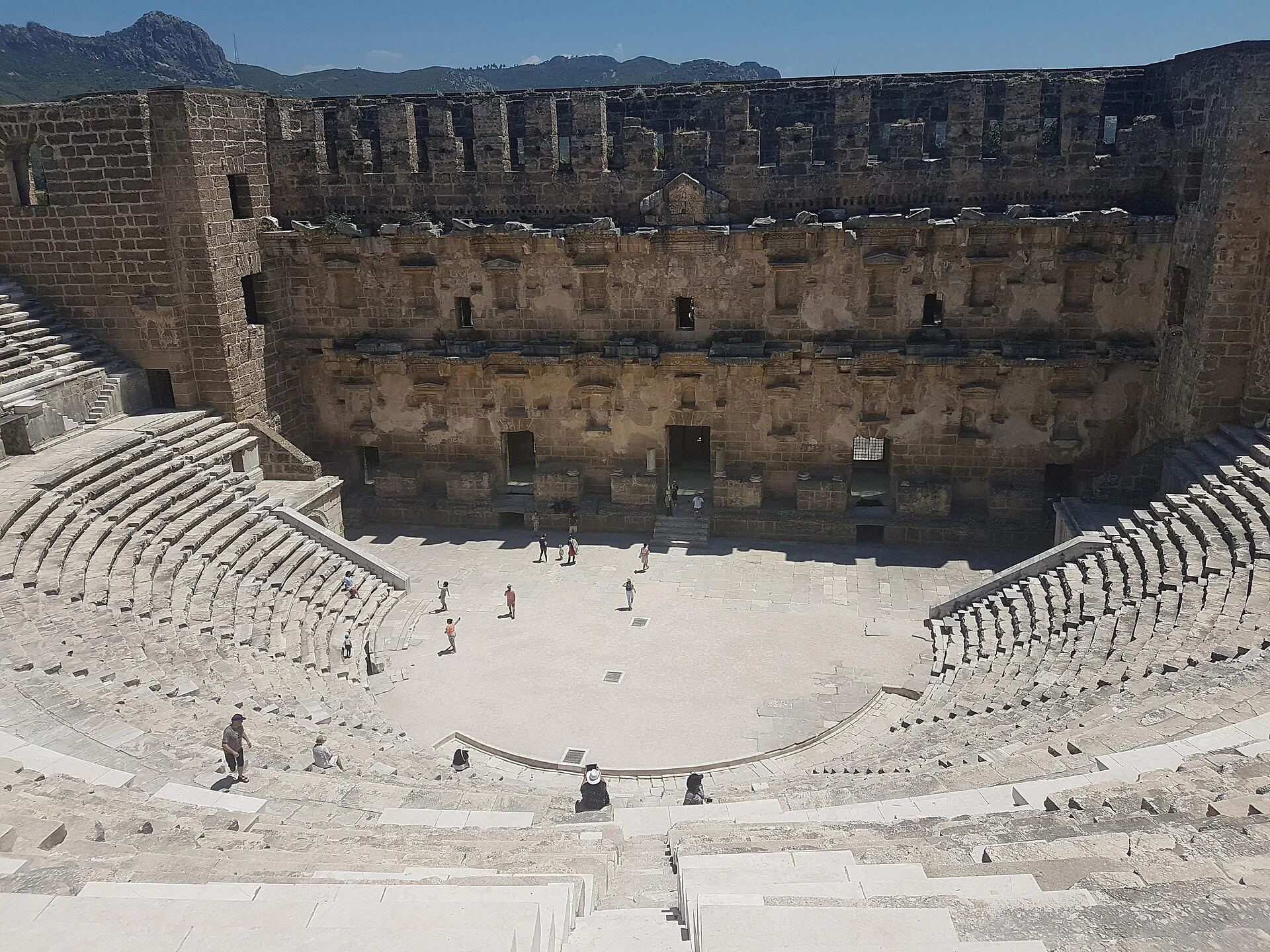
Aspendos Theatre
The theatre at Aspendos is the best-preserved Roman theatre in the ancient world. Built in the 2nd century AD during the reign of Marcus Aurelius, it survived largely intact because the Seljuks used it as a caravanserai, and its tall stage building, steep rows of seating and arched upper gallery are all still standing. The acoustics are good enough that it is still used for occasional concerts and performances. Aspendos lies about 45 km east of Antalya, near Serik. After the theatre, follow the path up the hill behind it to the scant remains of the ancient city and a view of the long Roman aqueduct across the plain. Go early or late in the day: there is little shade, and the tour buses arrive mid-morning.
SightsKaleiçi, Muratpaşa
Kaleiçi Old Town
Kaleiçi ("inside the castle") is Antalya's walled old town, a compact maze of lanes running downhill from Hadrian's Gate to the old Roman harbour. Restored Ottoman houses with overhanging timber upper floors now hold guesthouses, cafés and galleries, and landmarks from every era sit side by side: the 13th-century Seljuk Yivli Minare (fluted minaret), the Kesik Minare (broken minaret) on a former church, and the Hıdırlık Tower on the cliffs above the sea. It is easy to cover the whole quarter on foot in a morning, but it is at its best in the late afternoon and evening, when the heat eases and the harbour lights come on. The lanes are steep and cobbled, so wear proper shoes. The small Suna & İnan Kıraç Kaleiçi Museum, in a restored mansion and a former Greek church, is worth a short visit.
 Beaches
Konyaaltı
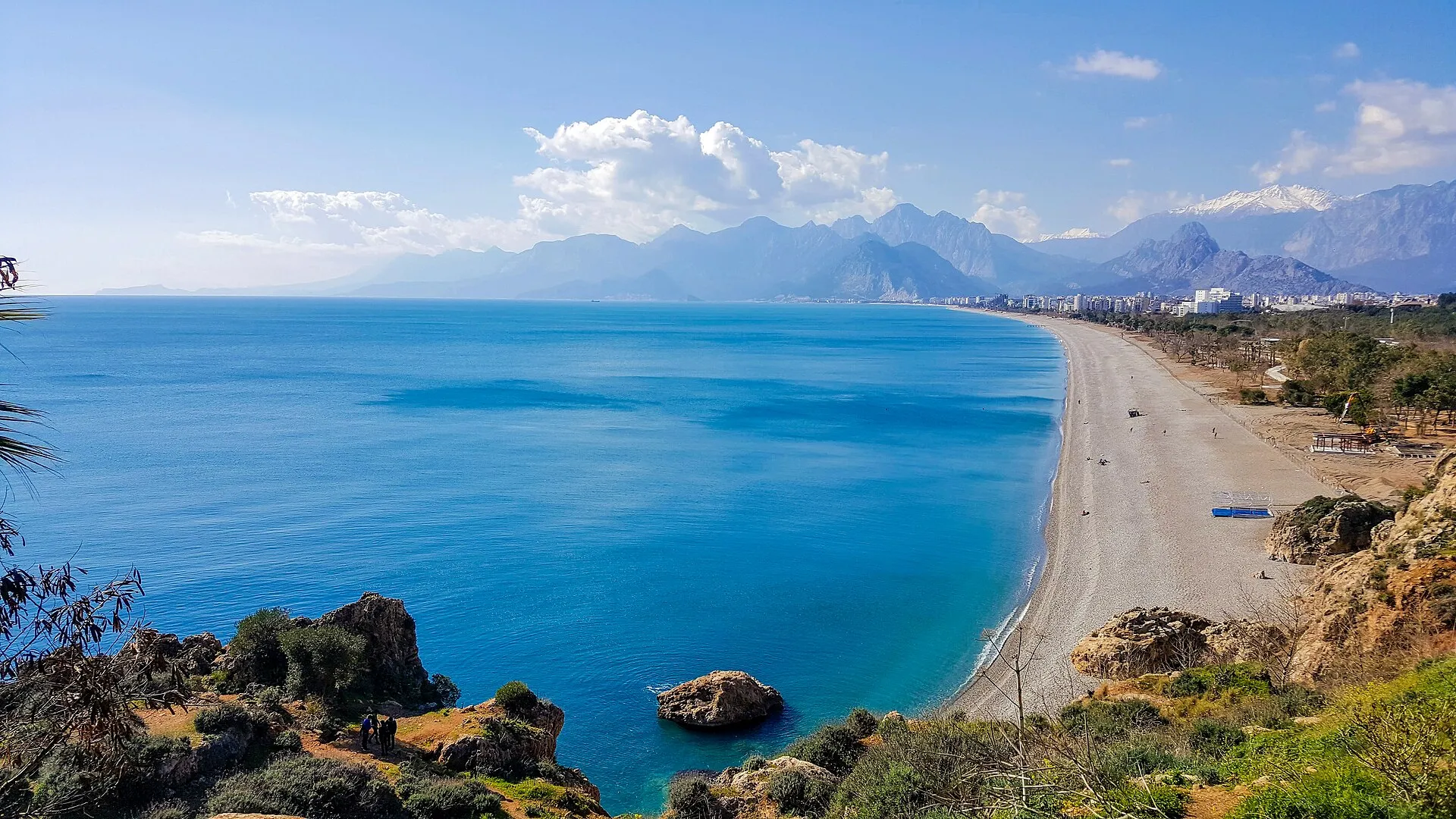
Konyaaltı Beach
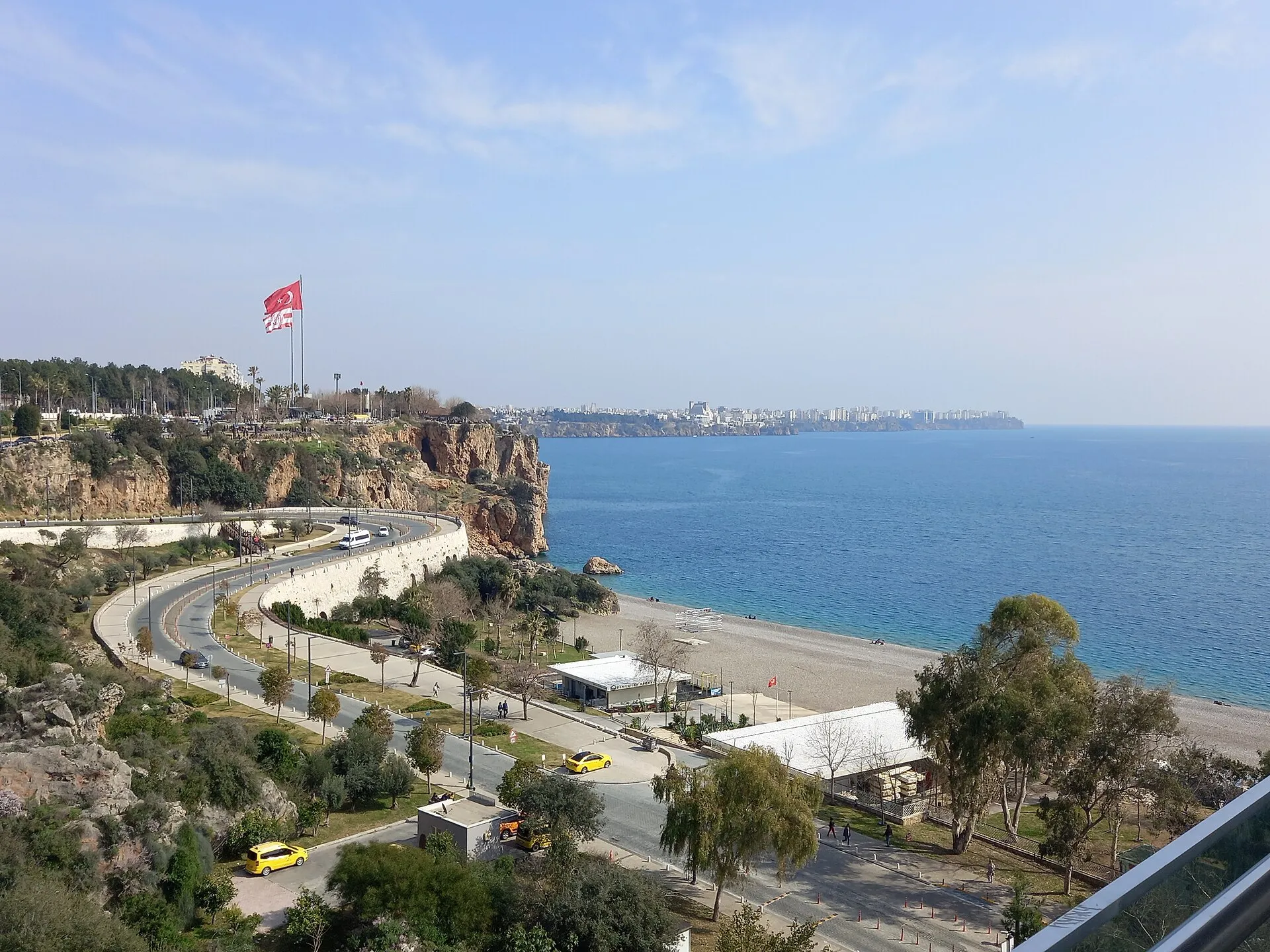
Konyaaltı is Antalya's city beach: a long sweep of pebbles and coarse sand curving west from the cliffs below the centre, with the Beydağları mountains rising behind it. A broad seafront park runs the length of the beach, with cycle paths, playgrounds, cafés and beach clubs that rent sunloungers and umbrellas, while plenty of stretches remain free for anyone to lay down a towel. The water deepens quickly and is usually clear, which makes it good for swimming. The eastern end is the easiest to reach from Kaleiçi by tram, taxi or the lift down from the clifftop park. Stay for sunset, when the light catches the mountains across the bay.
 Food & drink
Atatürk Kültür Parkı, Konyaaltı· ₺₺₺
7 Mehmet
Founded in 1937 and run by three generations of the Akdağ family, 7 Mehmet is Antalya's best-known restaurant, set in the green Atatürk Kültür Parkı above the eastern end of Konyaaltı Beach. The kitchen sticks to Turkish and Mediterranean classics done well: meze built around local produce, grilled fish, slow-roasted kid and grouper, and a much-loved candied pumpkin dessert. The terrace has views towards the sea and the mountains, and it is the place locals choose for family celebrations, so book ahead for dinner and on weekends. It sits a short taxi ride west of Kaleiçi, which makes it an easy pairing with an afternoon on Konyaaltı Beach.
 Nightlife
Hıdırlık Sokak, Kaleiçi, Muratpaşa· ₺₺
Castle Café
Perched on the cliff edge beside the Hıdırlık Tower, at the southern tip of Kaleiçi, Castle Café has one of the best sunset views in Antalya: across the Gulf of Antalya to the mountains on the far side of Konyaaltı. Drinks are reasonably priced for the location, and the terrace draws a young local crowd as well as visitors. It works as a café during the day and a bar in the evening, with simple food such as grilled fish and pasta. Arrive well before sunset to get a table on the edge. It is reached from Hıdırlık Sokak, or by the path opposite the tower.
 Nature
Düden Park, Lara, Muratpaşa
Düden Waterfalls
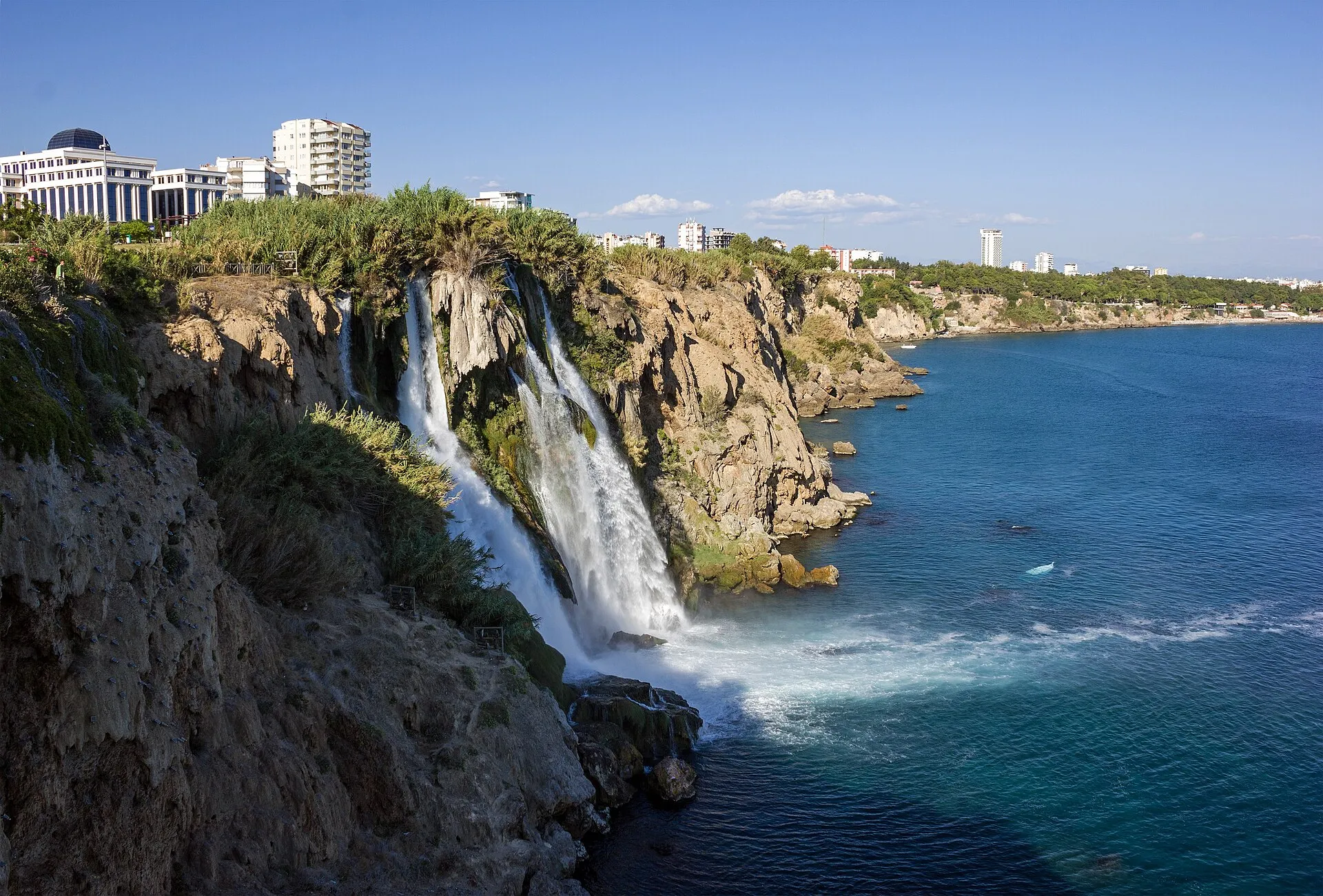
The Düden River ends its journey in spectacular fashion, pouring straight off the coastal cliffs into the Mediterranean at Lara, on Antalya's eastern side. The Lower Düden Falls are best seen from Düden Park, a landscaped clifftop park with viewing platforms right beside the cascade, where spray and rainbows hang over the sea on sunny afternoons. A second set of falls, the Upper Düden Falls, lies further inland in a wooded park in the northern suburbs. The lower falls are a short taxi or bus ride from the centre and make a good stop on the way to Lara Beach. For the classic view from below, take one of the boat trips that leave from the Kaleiçi harbour and run along the cliffs to the foot of the waterfall.
 Sights
Atatürk Caddesi, Kaleiçi, Muratpaşa
Hadrian's Gate
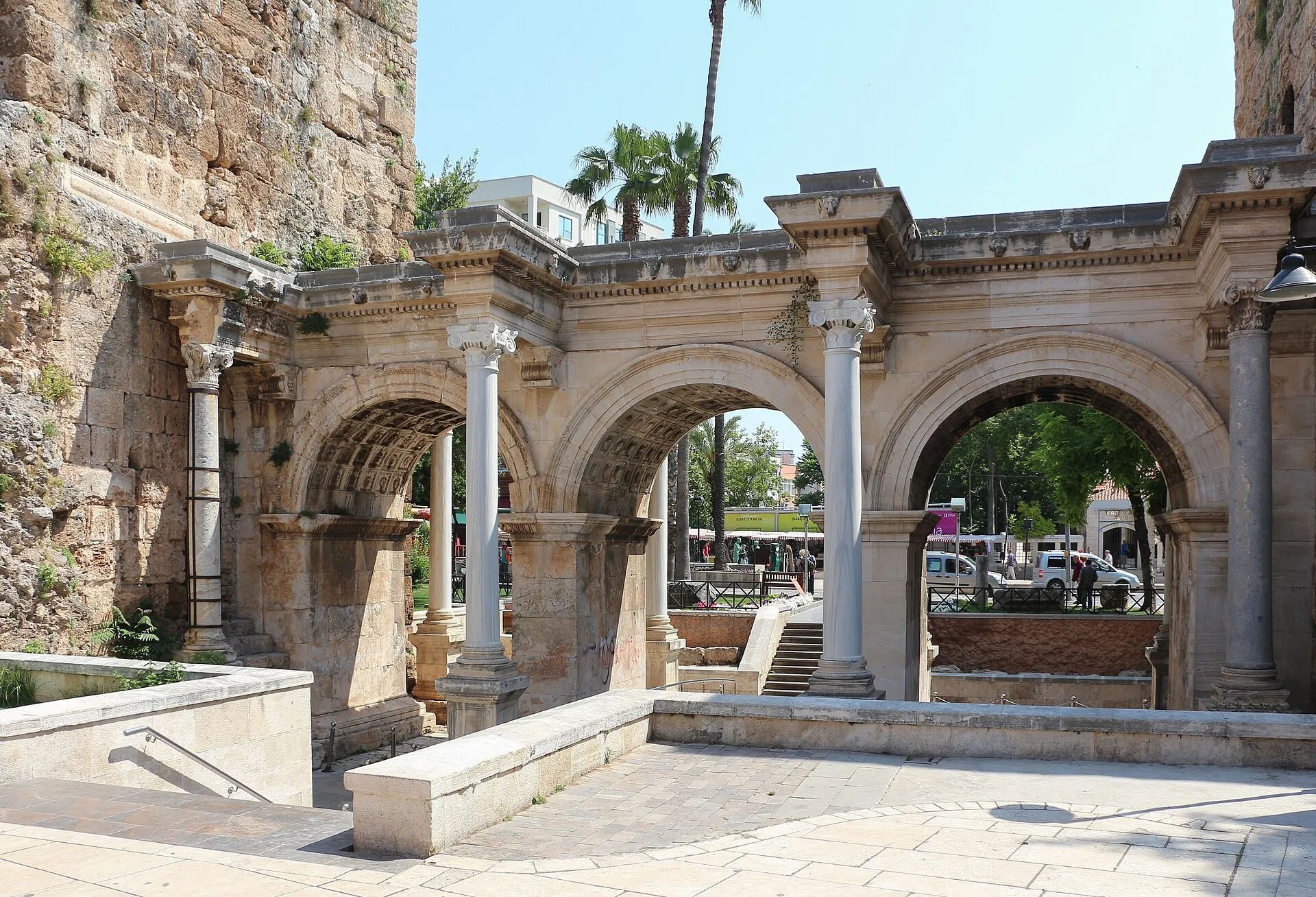
This triple-arched marble gateway was built in AD 130 to mark the visit of the Roman emperor Hadrian, and for centuries it was walled into the city's defences, which helped preserve it. Today it is the grand entrance to Kaleiçi from Atatürk Caddesi, flanked by two stone towers, with coffered ceilings under the arches and the original paving below, still grooved by cart wheels. It takes only a few minutes to see, but it makes the natural starting point for a walk through the old town. Look down through the glass-covered sections to see the ancient road surface, and come back after dark, when the gate is floodlit and the street is lively.
 Beaches
Güzeloba, Muratpaşa
Lara Beach
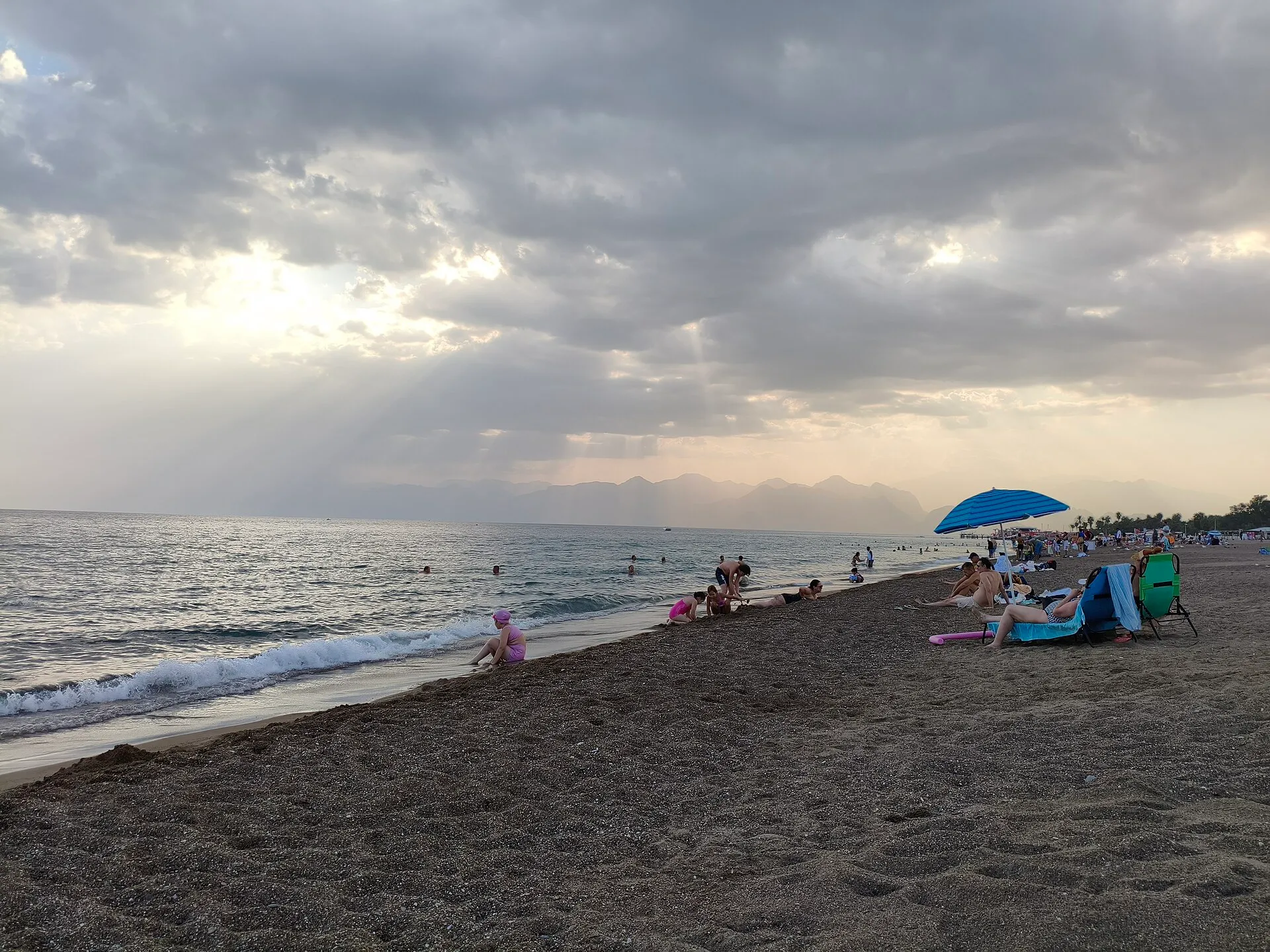
East of the city, beyond the Düden Waterfalls, the cliffs give way to Lara, a long, gently shelving beach of soft golden sand. It is the sandier and shallower alternative to Konyaaltı, which makes it popular with families, and on clear days you can look back across the bay to the mountains on the far side. Much of the shoreline further east is lined with large all-inclusive resorts, but there are public stretches with simple facilities near the start of the beach. Lara is about 12 km from Kaleiçi; city buses run along the coast road, or take a taxi. It can get crowded on summer weekends, when local families come out in force.
 Museums & ruins
Aksu, Antalya· ₺₺
Perge
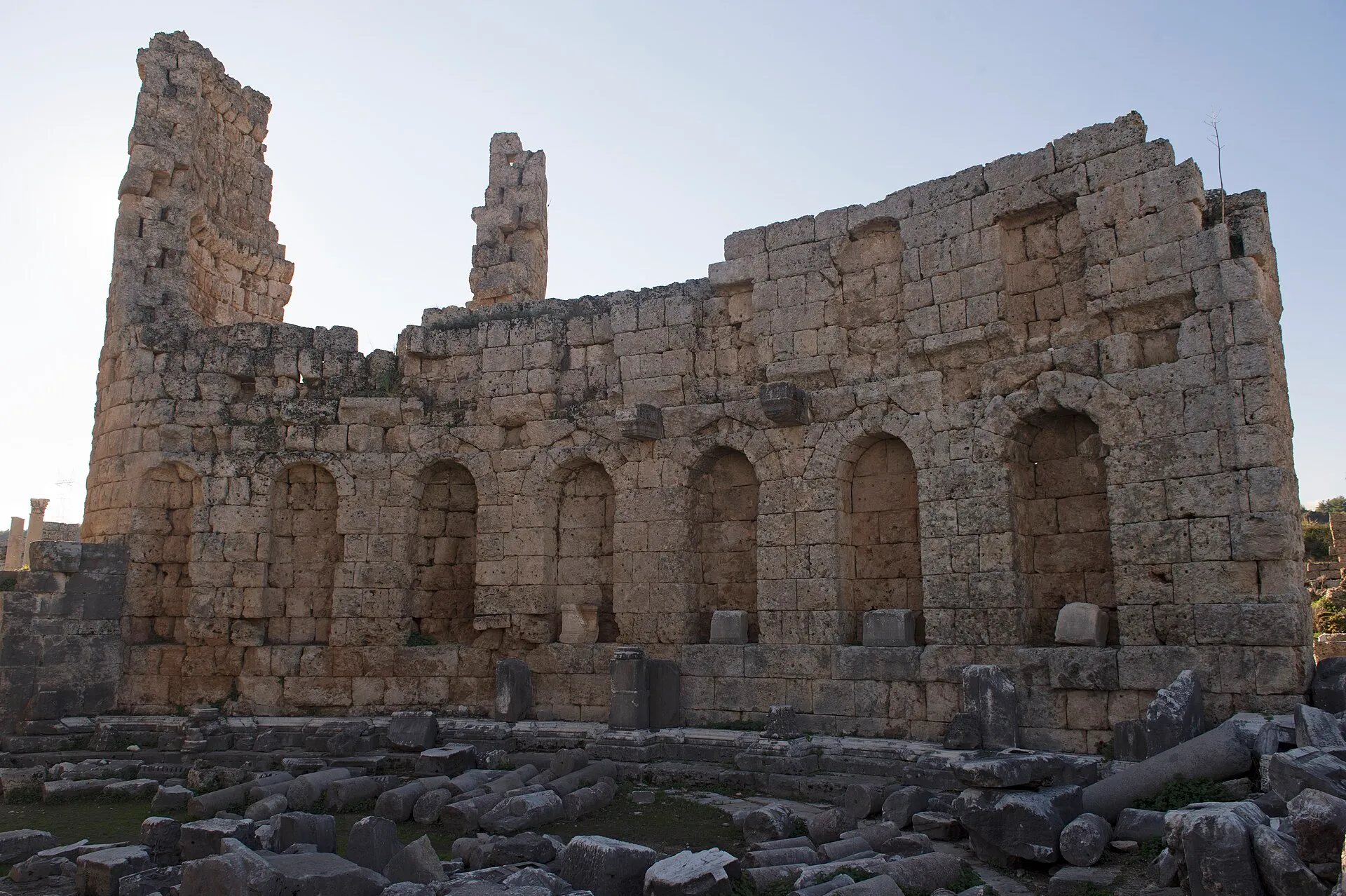
Perge was one of the great cities of ancient Pamphylia, and its ruins spread across the plain at Aksu, about 17 km east of central Antalya. You enter past a Roman gate and the twin round towers of the Hellenistic Gate, then walk up a long colonnaded street with a water channel running down its centre, lined with the remains of shops, baths and a large agora. The apostle Paul preached here on his first missionary journey. Many of the finest statues found at Perge are now held by the Antalya Museum, so the site itself is about scale and layout rather than decoration. It is flat and exposed, so bring water and a hat, and allow a couple of hours. It combines easily with Aspendos in a single day.
 Museums & ruins
Güllük Dağı–Termessos National Park, Döşemealtı, Antalya· ₺₺
Termessos
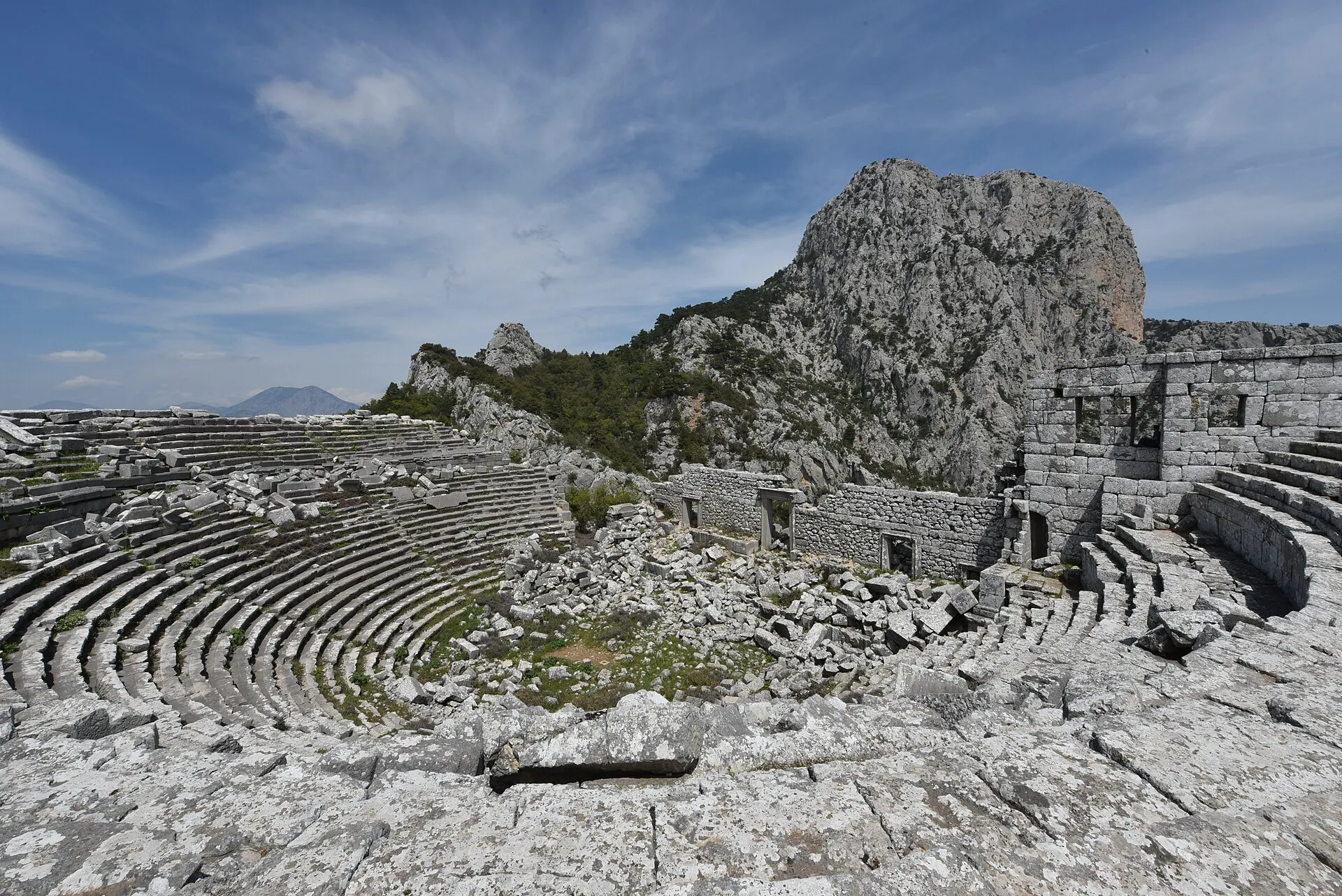
High in the mountains west of Antalya, Termessos was a Pisidian stronghold so well defended that Alexander the Great chose not to besiege it. The ruins are scattered across a forested ridge inside the Güllük Dağı–Termessos National Park, and they feel wild and unrestored: tombs tumbled by earthquakes, cisterns, a gymnasium and, above all, a theatre perched on the edge of a cliff with views across the peaks. Reaching the site takes effort. From the car park it is a steep, rocky climb of around half an hour to the theatre, and longer to explore the necropolis beyond. Wear sturdy shoes, carry water and avoid the midday heat in summer. There is no public transport to speak of, so come by car, taxi or tour.
 Where to stay
Karanlık Sokak, Kaleiçi, Muratpaşa· ₺₺₺
Tuvana Hotel
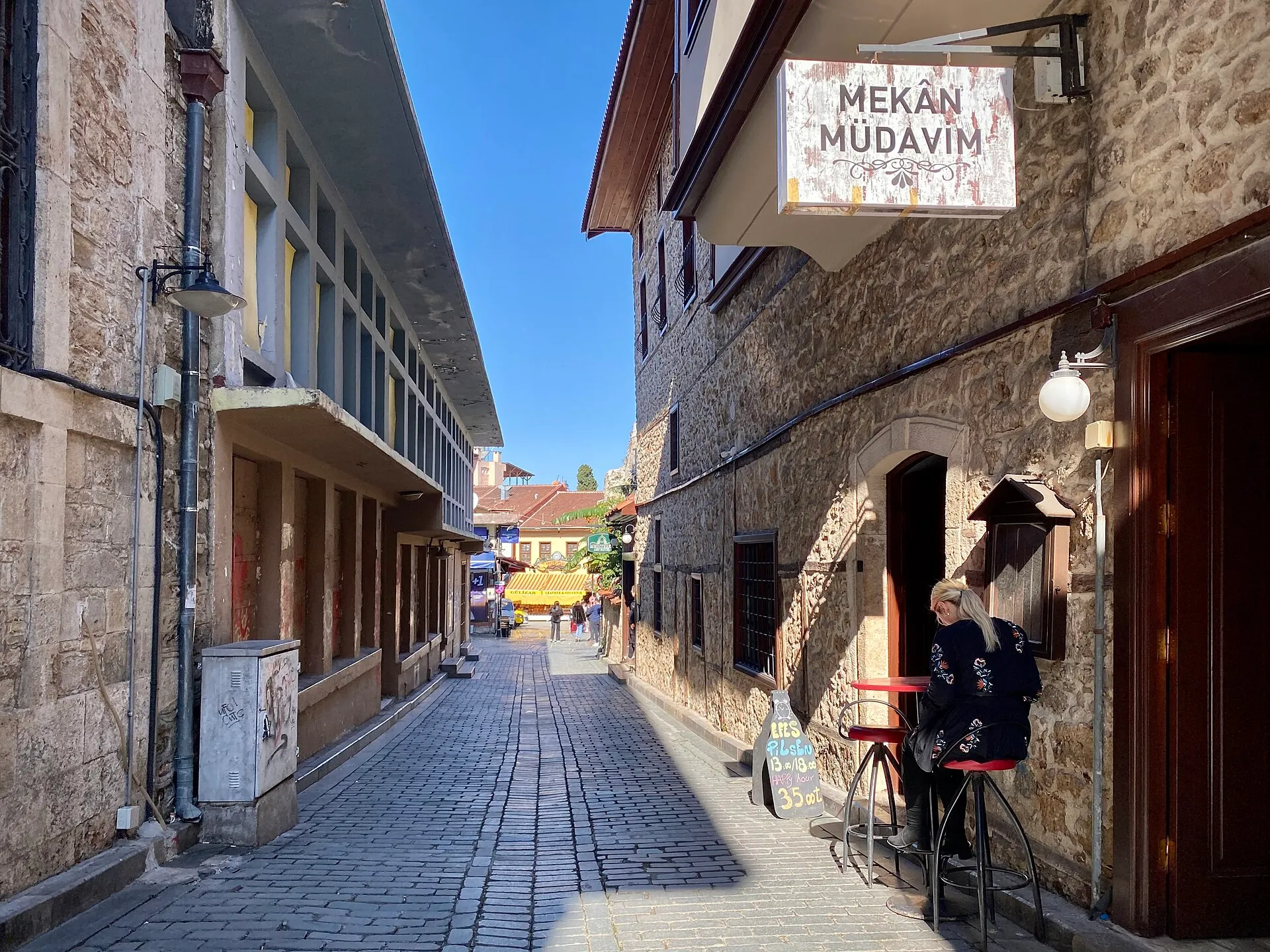
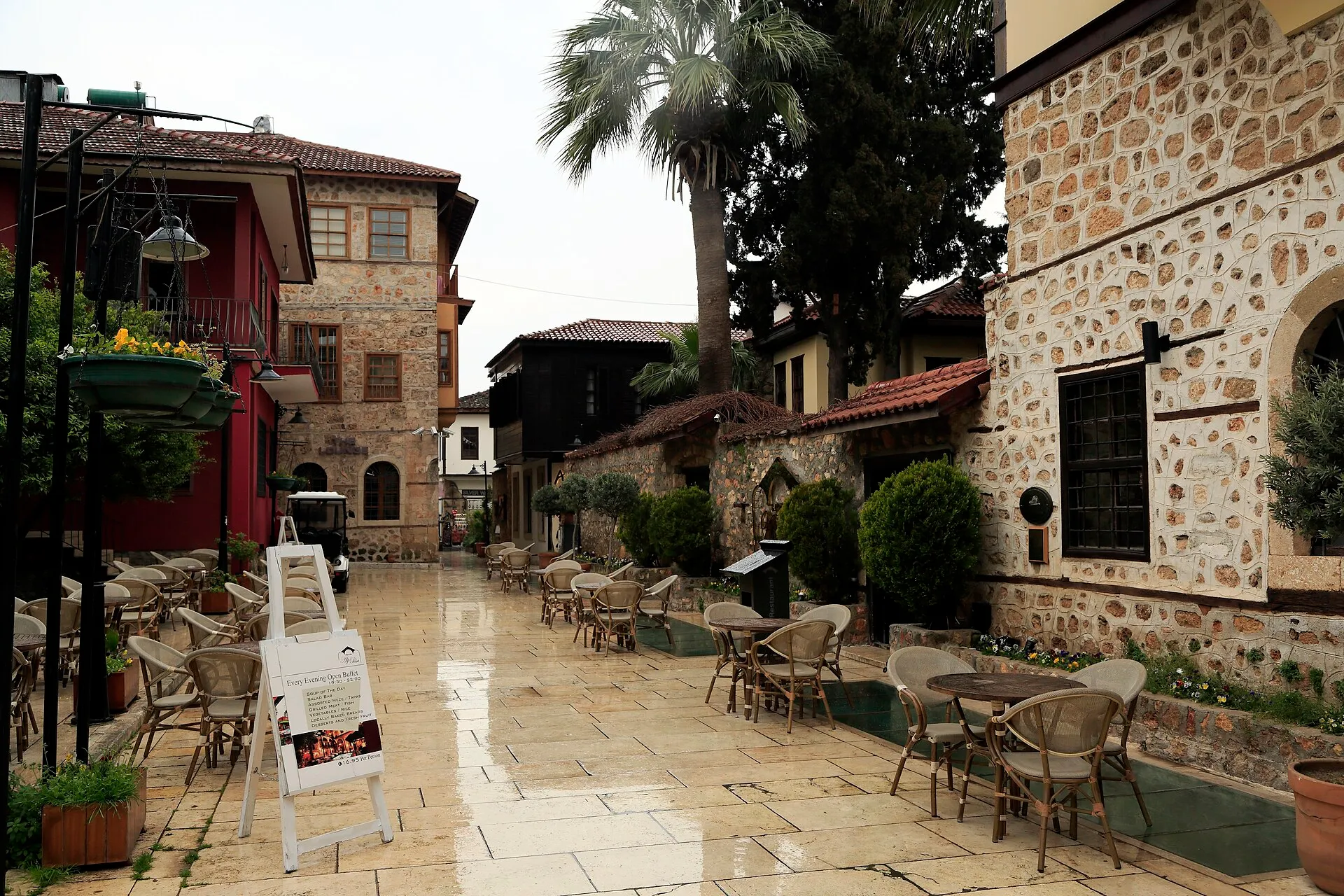
One of the longest-established boutique hotels in Kaleiçi, the Tuvana occupies a cluster of restored Ottoman houses on a quiet pedestrian lane a few minutes' walk from the harbour and Hadrian's Gate. Rooms combine timber ceilings and period details with modern comforts, and the courtyards, shaded by trees around a pool, feel a world away from the busy streets outside. The hotel is also home to Seraser, one of Antalya's most highly regarded fine-dining restaurants, which is worth booking even if you are staying elsewhere. The hotel is open all year. Cars cannot reach the door, so arrange your arrival with the hotel in advance.
 Food & drink
Hesapçı Sokak, Kaleiçi, Muratpaşa· ₺₺₺
Vanilla
A Kaleiçi fixture since 2007, Vanilla is run by an English chef and his Turkish wife and serves modern European and Mediterranean cooking with the occasional Asian touch, built around seasonal local ingredients. The dining room is contemporary and relaxed, with tables spilling out onto quiet Hesapçı Sokak in the warmer months. It is a good choice when you want a change from kebabs and meze without going formal, and it has a loyal following among long-stay visitors and expats. Booking is sensible in high season, especially for outdoor tables in the evening.